
Reservations
Shop the Spirit of the Southwest
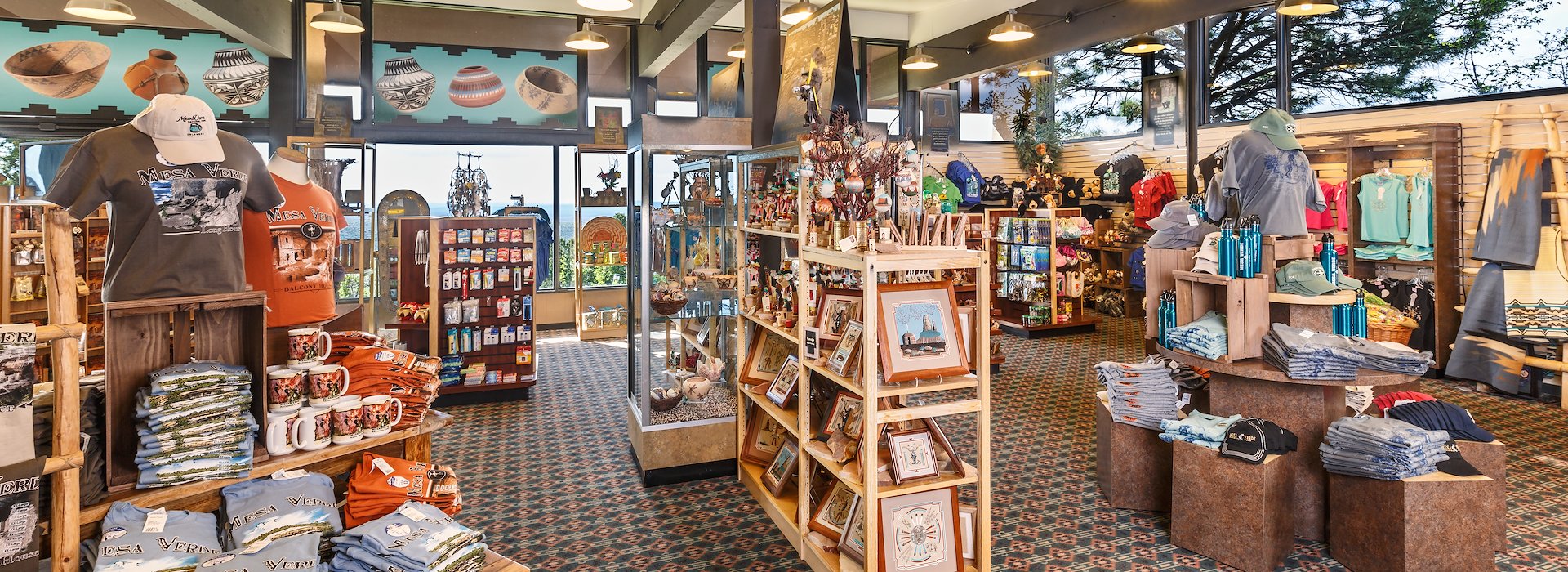
At Mesa Verde, shopping is more than just a souvenir stop—it’s a cultural experience. Browse handcrafted Native American art, eco-friendly finds, and Southwest-inspired keepsakes. From silver and turquoise jewelry to woven baskets and kachina dolls, each item tells a story. Whether you're after a memory, a masterpiece, or a memento, you'll find it here—rooted in history, made for today.
Also green and eco-friendly, biodegradable, and recycled products including 100% recycled cotton clothing. Our gift shops are also stocked with one-of-a-kind casual clothing, Mesa Verde souvenirs, posters, DVD's, CDs, and books – as well as film, disposable cameras, sunglasses and sunscreen. Local and southwestern gourmet snacks can all be found at Far View Terrace.
Please note that all Mesa Verde locations operate as cash‑free. All major credit cards and debit cards are accepted.
Hopi Kachina Dolls
The word kachina (kah-chee-nah) has long been used by outsiders to refer to any of the hundreds of spiritual beings central to Hopi religious life as well as to the dolls that depict them. According to the Hopi, katsina (kahtsee-nah) is more correct and preferred.
Kachina dolls are traditionally carved from the roots of cottonwood trees which once were abundant on and near the Hopi lands. Dolls carved from 1 piece of wood are preferred by savvy collectors. The Koyemsi, or Mudhead Kachina, is a clown who may be seen in most Hopi ceremonies. Hoop Dancer amuses the audience of a major ceremony. The rings represent the circle of life.
Pottery
Acoma Pottery Tradition
The pottery of Acoma is strongly recognized for fluted rims, thin walls and geometric design. Orange and black are traditional colors. Hatching patterns symbolize rain, while lightning, thunder clouds and mountains are also represented. The influences of the cycle of life, water and sky are frequently used.
Santa Clara Indian Pottery
Santa Clara pottery artists created black-on-black and red vessels. Santa Clara Pueblo pottery artists rely on etching, carving and sgraffito to create designs rather than painting them. The Avanyu, or water snake, is a common pattern, but Santa Clara Pueblo pottery artists also favor hummingbirds, butterflies, dragonflies and floral patterns, many of which incorporate small stones for colored decoration.
Navajo Horsehair Pottery
Horsehair Pottery is fired using a special technique. Fine lines are created with the hair from the mane of the horse, and thick lines are created from the hair of the tail. After the pot is fired, it is rock polished; no paint or glaze is used.
Navajo Textiles
Navajo people tell us they learned to weave from Spider Woman and that the first loom was of sky and earth cords, with weaving tools of sunlight, lightning, white shell, and crystal. The wool is often hand spun, often taking more time than the actual weaving. A large piece can take two years to make.
Traditional Navajo weaving used upright looms with no moving parts. Support poles were traditionally constructed of wood; steel pipe is more common today. Different designs are produced by different communities of the Navajo Reservation. Examples are Tec Nos Pos from Tec Nos Pos, Arizona, Two Grey Hills from New Mexico, and Storm Pattern from The Gap in Arizona.
Jewelry
Known for finely wrought pieces with silver and turquoise, handcrafted Native American jewelry is an art form intended for daily use, silver will tarnish less when you wear it.
Squash Blossom Necklace
The inverted crescent pendant on squash-blossom necklaces, called the 'Naja' by the Navajo. As a crescent, this form goes back as far as the Paleolithic period.
Navajo Turquoise
To the Navajo tribe, the color turquoise represents happiness, luck, and health. Turquoise is also the most common component of Native American Jewelry.
Hopi Jewelry
Hopi jewelry styles use a wide variety of designs mostly with religious and tribal symbols, including those concerning beliefs about animals, nature, and their clans. Hopi jewelry is traditionally represented in boxes, buckles, and bracelets of silver cutouts overlaid on a dark background.